Thursday, January 4, 2024

Oxygen plays a crucial role in advancing technology.

   Oxygen plays a crucial role in advancing technology.


The beginning is always tricky. Even humans must take their first steps a long time before they get a driver's license. Same way, all civilizations must make their first spaceflight before they can conquer galaxies. 

Nobody can pass the first steps if they want to reach something. Even if hypothetical civilization controls the entire galaxy, there has always been the first flight to the orbiter, then to moons and planets, and finally to stars. 

When we make models about other civilizations and their abilities. We must realize one thing. Even if a person can drive a car that doesn't necessarily mean that person can drive a bicycle. If a person has not driven for a long time, they might forget how to drive the car to the parking lot.  That means no civilization knows everything. That means civilization might also forget some primitive skills. 
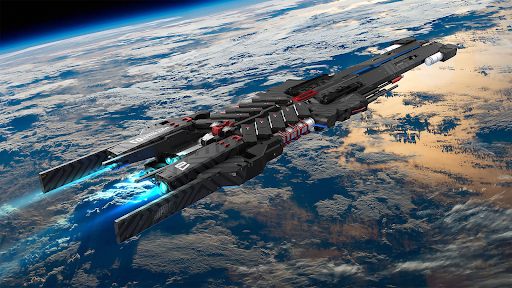


Researchers are searching for alien techno signatures. One of the techno signatures that researchers can use is pollution gasses. The idea in that kind of search is that alien civilizations use combustion engines as we use them. And that means they deliver pollution into their atmosphere. This means oxygen plays a vital role in technical processes as we know them. 

And another thing is oxygen plays a vital role in the carbon-base lifeform's metabolism. So without oxygen are no aliens and no technology because our first inventions are connected to fire. Without the ability to make fire is impossible to conquer cold areas. Fire is crucial for metal hardware and cooking food. Fire also keeps organisms warm. 

When we think about the technical advancement of civilizations the  pre-Kardashev-1 scale civilization uses the combustion engines. But the Kardashev-scale 1 civilization will not use them anymore. The main power for Kardashev scale 1 civilization, which can control and benefit 100 % of their planet's and their moon's energy and other resources would use power satellites and maybe geothermal energy as energy sources. 

Then, we can think about the civilization's route to the interstellar civilization that controls at least its own and a couple of other solar systems. We must realize that the route to WARP technology, wormholes, and other kinds of things goes through combustion engines. 

Conquering the solar systems requires massive investments. The early Kardashev scale 1 civilization controls their planet. But they will not have the ability to make routine trips to other planets. Conquering the solar systems requires resources. And that means aliens require motivation for those projects. One motivation would be overpopulation. The aliens must make the bases and take raw materials. And their solar system is a good place to find those things. 

The first steps are always difficult but then the aliens will get routine for space trips. And maybe our route will follow that route. We are not a Kardashev-scale 1 civilization yet. And for reaching that level the species must have reason for making peace in their home planets. 

One of those things that can make species work for one purpose is the cosmic threat or some kind of climate change. The rogue planet that comes to the solar system can cause the need to create technology, that destroys this size of threat. The sad thing is that the outcoming enemy melts the community into one. The problem is that technology that can save civilization can be used as a weapon. 


"Energy consumption in three types of civilization as defined by Sagan's extended Kardashev scale" Wikipedia, Kardashev scale. 


Kardashev scale: Baby steps to stars. 


Kardashev scale 1: Civilization controls the entire planet. 

Kardashev scale 2: Civilization controls their solar system. 

Kardashev scale 3: Civilization controls the entire galaxy. 


If we connect Maslow's hierarchy of needs to that model, we can say that the Kardashev scale 1  automatically creates the need to reach Kardashev scale 2. Kardashev scale 2 creates the need to reach Kardashev scale 3. If the motive for conquering the solar system has been overpopulation, not even Dyson's spheres and terraformation cannot solve that problem forever. And that means civilization must always move to stars. Finally, that need comes to the front of them, when their home star expands to the red giant and uses its last fuel droplet. Then the nova eruption destroys the solar system's ability to maintain life. 


In the Kadashev scale, the path from the Kardashev scale 1 civilization that controls their planet to the Kardashev scale 3 civilization that controls the entire galaxy goes through the Kardashev scale 2. Civilization cannot pass any of the stages. And then we must realize that only the late Kardashev scale 3 civilization can control the entire galaxy. In the Kardashev scale reaching the first stage, Kardashev scale 1 will automatically create the need to develop technology to reach Kardashev scale 2. Kardashev scale 2 creates the need to reach the Kardashev scale 3. The idea for that model is taken from Maslow's hierarchy of needs. The lower level in the Kardashev scale creates the need to reach the next level. 

But things like overpopulation can force the species to create methods to conquer first their solar system and then other solar systems. But conquering other solar systems requires that the civilization reaches Kardashev scale 2. And the path to that goes through Kardashev scale 1. Civilization cannot pass the lower level in the Kardashev scale. 

That means if the civilization wants to turn Kardashev scale 3 civilization, that controls entire or large areas in the galaxy it must go through scales 1 and 2 because in the Kardashev model civilization studies technology that it needs for the next step in the lower levels. 

And before nobody conquers the solar systems they must create technology that gives a safe and cheap way to transport merchandise to the orbiter. 

The aliens must create regular rockets. Before they transfer use some more effective systems like magnetic catapults. They are connected into very tall towers. The magnetic track pulls the cargo to the top of the tower where the engines start. In some other models, the hydrogen-scramjet-driven hypersonic aircraft pulls a small shuttle to the ballistic jump. Then at the top point, the rockets of that small remote-controlled shuttle will start to operate. 


https://scitechdaily.com/unlocking-alien-tech-oxygens-crucial-role-in-extraterrestrial-civilizations/


https://en.wikipedia.org/wiki/Kardashev_scale

Thursday, December 28, 2023

Westinghouse Corporation's new "eVinci" microreactors don't need water.

  Westinghouse Corporation's new "eVinci" microreactors don't need water. 


Microreactors or micro nuclear reactors are the next-generation tools for power supply. Many of those systems are planned to be portable, and portable nuclear reactors called "PoNu" can offer non-centralized power supply solutions for temporary or static use. The operators can connect microreactors into series or in lines. And that makes those small nuclear power plants give very high power. 

Portable nuclear reactors can give very flexible solutions for many things. In some models, the portable nuclear reactor can give electricity to the truck that transports it to a ship or aircraft. Then that reactor can connect to the ship's or aircraft's electric systems. And it can give power to that. The same system can deliver energy to the area where it is transported. 


TRISO (TRi-structural ISOtropic particle fuel). fuel pellets cannot melt even at high temperatures. That makes those fuel pellets a very useful and safe way to create nuclear power. Shutting down TRISO reactors is easy. In some versions, there are two or more different sizes of pellets. And when some anomaly in operations happens, the hatch will open at the bottom of the reactor. There is a net that lets smaller pellets travel through it. That separates the fuel into 2 or more different chambers. 


The water supply has been a critical part of the use of microreactors in ground vehicles, ships, and aircraft. Normal nuclear reactors require water for cooling systems and power transfer. The nuclear reactor transfers its thermal energy to water that rotates turbines and generators. But another way to take electric power from reactors is to benefit the beta radiation (electrons) that the reactor sends. 

Westinghouse's "eVinci" reactor uses some kind of cooling pipes that transport thermal energy out from the reactor.  The liquid gas or even fast-moving air or ion flow that travels through the tubes that travel through fissile material can increase the cooling power. That is a suitable solution if the tubes themselves cannot stop the temperature rise in that reactor. 

Another thing is how to replace water in the cooling system. One of the systems that can make this thing is the gas-flow, laser- or ion-based thermal pump that sends radiation through the nuclear element or fissile material. That kind of thermal pump transports thermal energy out of the reactor. In that version, the aimed pressure impulses, acoustic beams, or laser and ion beams that travel through the hole in the middle of the reactor can transport thermal energy out from it. The laser ray can also ionize air and make the eruption channel for electrons. 


And that could explain the mystery rays below some UAPs. 


Some eyewitnesses report. That they saw some kind of laser ray. Below those things. There is a theory that the mystery beam is the thermal pump that should keep the reactor's temperature low. We all know that microreactors also can used in rockets. And those kinds of systems are powerful tools for nuclear thermal rockets like NERVA (Nuclear Engine for Rocket Vehicle Application) systems. 

But laser beam accelerated electrons and ions will give those systems higher speed. The photon-accelerated ions and electrons have very high speed, and the small nuclear reactor can also operate as the source for helium ions (Alpha particles) and electrons (Beta particles). The speed of those particles that travel out from the engine can rise even closer to the speed of light. 


https://www.energy.gov/ne/articles/triso-particles-most-robust-nuclear-fuel-earth

https://interestingengineering.com/innovation/microreactor-no-water-for-operation

https://www.msn.com/en-us/weather/topstories/evince-microreactor-boasts-8-years-of-nuclear-power-without-using-water/ar-AA1m3Z92


https://www.westinghousenuclear.com/energy-systems/evinci-microreactor

https://en.wikipedia.org/wiki/NERVA

Wednesday, December 27, 2023

Sierra Space's Dream Chaser miniature shuttle advances ISS supply.

   Sierra Space's Dream Chaser miniature shuttle advances ISS supply. 


Dream Chaser miniature shuttle is one of the miniature space shuttles, like X37B, developed for civil and military purposes. NASA used Dream Chaser to transport equipment to the ISS (International Space Station). This miniature shuttle can make its missions manned or unmanned. 

The Dream Chaser and its companions can also fix satellites and make many other space duties. The miniature shuttles can carry repairement robots to trajectory. Those robots can also remove critical parts from jammed military and civil satellites that operate in confidential roles. That denies the confidential information transfer to hostile hands. 

The space shuttles can carry radars or telescopes. That can observe ground and other satellites. Those radars can find lost cities in the jungle.  But it also can search underground complexes. That kind of radio signal will not involve data. 

"Illustration of Sierra Space’s first Dream Chaser, named DC#1 (Tenacity). The Dream Chaser spacecraft, developed by Sierra Space for NASA, is preparing for a 2024 demonstration mission to the ISS, focusing on cargo delivery and in-orbit certification. Credit: Sierra Space" (ScitechDaily.com/Sierra Space’s Dream Chaser Spaceplane: Revolutionizing ISS Resupply for NASA)


Maybe the Chinese shuttle's six mysterious "wingmen" are some kind of radar satellites. It's possible that the empty signals that some of those wingmen capsules keep the frequency occupied. Or maybe they are targeting signals that the shuttle can find those capsules. And transfer them to its cargo bay. 

In my wildest dreams, those capsules are antimatter tanks. The magnetic bottle has a thin gold layer that turns electrons to positrons. The orbiter is a good place to collect antimatter. And I certainly hope that I'm wrong. 

The miniature shuttle can operate under the AI control and it can record information into its hard disk. Then the shuttle returns and the crew will download its mission data. 

When we think of miniature shuttles as space fighters whose mission is to destroy satellites or incoming missiles we can say that centrifugal cannons are enough for that mission. The projectile's speed must not rise very high if the shuttle starts to orbit in the opposite direction to its target.

When those centrifugal cannons launch projectiles against the target. Shuttle and its target are at impact course. That gives those projectiles a very high impact speed. That kind of system is effective against missiles and satellites. The other thing is this. Space shuttles are multimission systems and modular mission packs that can be positioned in a cargo bay making them powerful and flexible systems. 


https://scitechdaily.com/sierra-spaces-dream-chaser-spaceplane-revolutionizing-iss-resupply-for-nasa/


https://www.space.com/china-space-plane-depoyed-mystery-objects


Saturday, December 23, 2023

This type of extreme transportation technology is not yet possible.

    This type of extreme transportation technology is not yet possible. 


Hyperloop shuts down. 


Hyperloop the tube train in which low pressure sucks forward in a vacuum tube is one kind of hype. The company ended its operations because it didn't get any customers. But the idea of this kind of train, which reaches about 1500 km/h remains. The political situation is not suitable for this kind of long-distance travel. And there were also some kind of technical problems. But the major problem was the needed infrastructure. The low-pressure tubes were very expensive. And the company ends its operations. Technical and political things destroyed nice ideas. 

The idea of the hyperloop gave another very interesting idea for ultra-fast transportation. The idea is that the magnetic levitation train will connect with the hyperloop. The problem is that the speed of this kind of train could be even hypersonic. And if there is a problem with the brakes, that train will impact to wall with hypersonic speed. 

The idea is that the train hovers in a magnetic field, and the tube is like a particle accelerator. The magnetic accelerated train travels in the magnetic tube in a vacuum. And that allows it to raise its speed to a higher level than any aircraft can move. Steepness of the curve determines how fast the object can travel in that tube. 


The virtualized hyperloop. 


In some visions, there could be systems that create whirls or empty channels underwater. Those whirls and acoustic systems could used to make the channels through the oceans. And those channels allow to use of submarines that use rocket engines to travel through the oceans faster than usual. 

In that kind of system rotating loudspeakers or propellers make underwater tornado that goes from coast to coast. Then acoustic pike pushes water away from that whirl. And then. The rocket will travel through it. This kind of system requires lots of energy. 


The train ride to the future. 


Above is the film "Stephen Hawking's train ride to the future. The system will not work like this, because the shockwave from that train forms when it travels through air can destroy large areas. But if the train is closed in the vacuum tube, that thing denies the forming of the shockwave. This hypothetical system can have multiple layers in the tube, and between those layers would travel ions with the speed of light. That makes the system the giant donut-shaped Tipler cylinder. The speed of light is relative to the speed of the environment. That thing allows the virtual crossing of the speed of light or cosmic speed limit, which is necessary for returning to the past. When each of the internal layers travels at 70% of the speed of light, that thing can make this thing true. 


Above is a film about the hypothetical time machine. The train travels with the speed of light. The thing that makes this system complicated is that it requires a vacuum tube. That is around the world. And if there is some kind of leak in that tube, this thing causes large area destrouction if the train impacts to air molecules. So maybe this kind of system requires the ultimate, mega-size Stanford torus the giant particle accelerator. That is built around the sun. 

There is a possibility that the in future the researchers will use Stanford torus as the ultimate magnet loop. Stanford torus is the megastructure built around the sun. If the Stanford torus is a particle accelerator, it can transport capsules at the speed of light. That system can get its energy from solar panels and antimatter, that it harvests from solar wind. Those particles will impact thin gold layers. And that forms antimatter, that the accelerator can use as fuel. 

In the wildest vision sometimes in the future. Engineers will build this kind of accelerator around the sun. The idea is that. The system will accelerate the capsule to the speed of light, and then the radio systems start to increase the object's mass. That system makes it possible to travel at least to the future. Then in the future, the system will start to push radio waves to the train. And that thing should cause time dilation that turns time travel backward. But that requires so massive technology, that we cannot make it yet. 


https://interestingengineering.com/transportation/hyperloop-one-shut-operations-dec-2023


https://en.wikipedia.org/wiki/Stanford_torus


The AI solved one new mystery. And maybe in the future, our news will be AI-made.

   The AI solved one new mystery. And maybe in the future, our news will be AI-made. 


The AI can observe and control multiple objects at the same time. That means the AI can find out many new things from the information that it finds from sensors and archives. AI-based news is a new tool for information technology. The AI found the secret of polycrystalline materials. And the thing is that the AI is an ultimate tool for making complex 3D structures. 

The AI can also create 3D models of things like buildings and fit them to the wanted background. So tomorrow AI can act also as a tool for architects. The AI can make wave movement simulations in the building. The system can make simulations of the echoes. And make models. Following the orders that its users give. The AI requires some kind of models and clear orders that it can connect to orders. 


Image: Finlandia hall is one of the pieces of architectural jewelries. 


The AI can search models of famous architecture like Alvar Aalto's and some other architects' works. Then the AI can follow orders that follow Alvar Aalto's style. And make the house follow that architect's style. Then the AI can make a model and fit it into the environment where that building should stand. The system can benefit the mobile telephone group for testing acoustics. These kinds of tools can make it possible to create more customized architecture solutions than ever before. 

A start-up called Channel 1 will start AI-anchored news on its channel. This kind of technology is a tool, that can used for personalized news. And these kinds of things are making news more unilateral because now people can hear only things, that they want. And that is one of the most interesting- and same time saddest things. When people hear only things about topics. That they want to see, and what interests them. AI will be the next tool in the entertainment industry. 

Information that they get turns unilateral maybe somebody will introduce things like news which anchors users can modify or customize by using the AI. These kinds of things can turn into movies and maybe in the future, we can write some manuscript and then download it to AI. Then the AI uses virtual backgrounds and virtual actors turn that manuscript into reality. 


https://www.channel1.ai/


https://scitechdaily.com/ai-driven-discovery-mysteries-of-polycrystalline-materials-unraveled/


https://scitechdaily.com/ai-surpasses-reality-white-ai-faces-more-convincing-than-real-humans/


Image: https://www.finlandiatalo.fi/en/architecture-and-history/

Friday, December 22, 2023

Programmable bacteria can revolutionize medical work.

   Programmable bacteria can revolutionize medical work. 

Programmable synthetic bacteria can be game-changers in many places from medical work to nature research and military applications. The customized cyborg bacteria can involve shell antigens that don't activate the immune system. 

The price of robot bacteria is low. The cyborg bacteria cost is less than 1$. And that thing makes them suitable for multiple missions. In nature, researchers can use those cyborg bacteria to remove pollution. They can also research microcosmos like underwater lifeforms smaller than water droplets. 

The cyborg bacteria can also operate as a recon tool. That slips in an enemy base and searches things that happen in there. Like full-scale robots, cyborg bacteria can act as swarms of full-scale drones. Cyborg bacteria swarms can clean polluted watercourse. They can observe many small things. And then those systems can act as the most brutal weapons. That humans ever created. 


"Investigators are developing synthetic programmable bacteria to help kill cancerous tissue. Credit: Texas A&M Engineering". (ScitechDaily.com/The $1 Cure: How Programmable Bacteria Are Reshaping Cancer Therapy)


In medical work, cyborg bacteria can used to transfer DNA into another cell. The genetically engineered bacteria that microchips control can move in the human body. Then it can transfer DNA into another cell using its small fibers. The DNA travels in hollow fibers. The cyborg bacteria can travel in the right position in the human body, and transfer the genetic material into the wanted cells and cell groups.

Robot bacteria can remove cancer tissue, but that thing can also fight against other bacteria. Those cyborg bacteria can also remove plaque from blood vessels and make many other things. They can carry another cell to the right position in the human body. And those things can also fix damage in blood vessels. The genetically engineered cyborg bacteria can create fibrine that closes blood leaks, and that fibrine can close blood vessels that transport nutrients to the tumor. 

The cyborg bacteria can also act as immune cells in case people's immune cells cannot operate. That thing can happen in leukemia or AIDS. And the cyborg bacteria can take immune cell's missions in case. There human own cells cannot operate as they should. The genetically engineered cyborg bacteria can create neurotransmitter transporters. 

The ability to make neurotransmitter-transporters can make it possible for neurons. That they can interact with those cyborg bacteria.  Cyborg bacteria can transfer data between the nervous system and other systems. And that thing makes it possible to create a neuraport-type system where microchips swim to the right point of the nervous system. And when those microchips are not needed anymore, they can remove themselves from the body. 


https://scitechdaily.com/the-1-cure-how-programmable-bacteria-are-reshaping-cancer-therapy/

Thursday, December 21, 2023

AI has changed the world faster than the net.

 AI has changed the world faster than the net.


The AI or language models like Chat GPT and its followers are the tools that revolutionize the entire ICT infrastructure. Network-based applications are tools that can revolutionize working life and the AI-based architecture will make another bigger revolution. 

The AI makes everybody a programmer. The thing in business life is that the work must done effectively, and it should not be difficult. This thing has been one bottleneck for ICT development. The easiest way is not always the best way. Network-based applications are good tools for attackers. 

That they can ride with those programs. The attackers search for vulnerabilities in software. To make the application safe programmers must make complicated code and observe the source code so that attackers can't replace their source file by using their source files, where there are a couple of viruses packed with that program. 


A simpler way is that attackers cheat their targets to use applications that run on their servers. And that gives them access to all information that is made with that application. 

The AI makes complicated and large-size code very effectively. The code that the AI makes is error-free. One person can make hundreds or thousands of code lines in a very short time using AI. So that means the AI must have stoppers that deny writing malicious software. The AI that works as a language model can create control code for robots. In that case, the robot's operation is highly morphing. 

The AI can make virtual robots. That can collect and handle large data masses. Those applications will change the financial sector very soon. The AI can mine data from stock marketing. Then it can make investments for users. The algorithm can search for advances in marketing. 

AI allows that thing to maximize the profit. In that case, the system can use data. That is collected from trillions of targets. Handling that data mass is not possible for one human. But the AI algorithm can easily handle that kind of non-centralized investment. 

The system can share investments even in millions of points. And then it can sell them when it gets profit. The system can handle trillions of small targets. And that makes it possible to create a mode, where it cannot make losses. This is only one place where AI will make a revolution shortly. AI is best in business when it can handle limited and well-determined information.  But in the longer future AI will be part of our everyday life. 

If. We cannot cross the speed of light. We can make a shortcut through the fourth dimension.

What could interstellar supertechnology look like?  The WARP drive is something that we might not make quite soon. That system requires enor...